
Table of Contents
ToggleUnderstanding Rowing Machine Metrics and Monitors
Rowing machines look simple on the surface: sit down, strap in, pull the handle, repeat. But the moment the monitor lights up with numbers—pace, watts, strokes per minute—it can feel like you’re suddenly expected to speak a new language. The truth is, rowing machine monitors aren’t complicated once you understand what they’re trying to tell you.
These monitors exist for one reason: to translate your effort into useful feedback. They show how hard you’re working, how efficiently you’re moving, and how consistent you are from stroke to stroke. When you understand the metrics, rowing stops being guesswork and starts becoming a controlled, measurable workout.
In this article I break down rowing machine monitors —what each metric means, why it matters, and how to use it without overthinking things.
What Is a Rowing Machine Monitor?
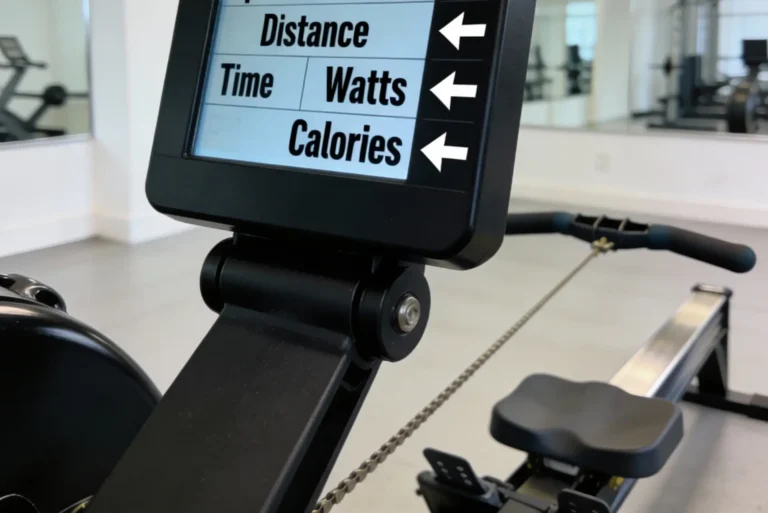
A rowing machine monitor is the digital display attached to the machine that tracks your workout in real time. It measures how fast you’re rowing, how much power you’re producing, and how long or far you’ve gone. Think of it as a dashboard, similar to the one in a car.
Instead of speed and fuel, though, you’re seeing performance data based on how you move the handle and how fast the flywheel or resistance system responds. The monitor doesn’t judge you—it just reports what’s happening.
Good rowing machine monitors are designed to be consistent and reliable. If you row harder, the numbers reflect that. If your pace drops, you’ll see it immediately. That instant feedback is what makes rowing such an effective training tool.
Distance: What Those Meters Really Mean
Distance on a rowing machine is usually shown in meters. This doesn’t mean you’re literally moving forward, but it represents how far your effort would take a boat on water.
Most workouts are built around common rowing distances:
-
500 meters (short and intense)
-
2,000 meters (the standard benchmark)
-
5,000 meters or more (endurance-focused)
Distance is useful because it gives structure to your workout. Instead of rowing “until you’re tired,” you row toward a clear target. Over time, you can compare how long it takes you to cover the same distance and see real improvement.
Time: More Than Just a Stopwatch
Time seems obvious, but it works together with every other metric on the monitor. Time tells you:
-
How long you’ve been rowing
-
How long each interval lasts
-
How long your rest periods are
When paired with distance, time becomes meaningful. Rowing 2,000 meters in 9 minutes is very different from rowing it in 7. Tracking time helps you understand pacing and endurance, not just effort.
Split Time (Pace): The Most Important Number
If there’s one metric rowers pay the most attention to, it’s split time—usually shown as time per 500 meters.
For example:
-
2:30 / 500m = slower, steady pace
-
2:00 / 500m = moderate effort
-
1:45 / 500m = high intensity
Split time tells you how fast you’re rowing right now. Lower numbers mean you’re moving faster. This metric is powerful because it instantly reflects changes in effort and technique.
If your split suddenly jumps higher, it often means:
-
You’re getting tired
-
Your strokes are getting sloppy
-
You’re rushing instead of pushing with your legs
Stroke Rate (SPM): How Fast You’re Moving
Stroke rate, measured in strokes per minute (SPM), shows how many rowing strokes you take in one minute.
Common ranges:
-
18–22 SPM: steady, controlled rowing
-
24–28 SPM: moderate intensity
-
30+ SPM: sprinting or racing
Here’s the key thing many beginners miss: higher stroke rate doesn’t automatically mean better performance. Powerful, efficient strokes at a lower rate often produce better results than frantic, shallow strokes at a high rate.
The monitor helps you find balance between rhythm and power.
Watts: Your True Power Output
Watts measure how much power you’re generating. This is one of the most honest metrics on rowing machine monitors because it reflects actual work done.
Two people can row at the same stroke rate, but the one producing more watts is pushing harder with each stroke. Watts are especially useful for:
-
Strength-focused training
-
Comparing effort across different workouts
-
Tracking improvements in power over time
If your watts go up while your stroke rate stays the same, that’s progress.
Calories: Useful, But Not Perfect
Calories burned are estimates based on time and power output. They’re helpful for general fitness tracking, but they shouldn’t be your only focus.
Rowing machines estimate calories differently depending on the brand and settings. Treat this number as a rough guide, not a precise measurement. Improvements in pace, watts, and consistency usually matter more.
Drag Factor and Resistance
Some rowing machine monitors show drag factor or resistance level. This reflects how heavy the stroke feels, not how “hard” the workout is.
Higher drag:
-
Feels heavier
-
Encourages slower, stronger strokes
Lower drag:
-
Feels lighter
-
Encourages faster rhythm
A higher drag does not automatically mean a better workout. Many experienced rowers use moderate drag and focus on technique instead.
How Metrics Work Together
No single metric tells the whole story. The real value of rowing machine monitors comes from how numbers interact.
For example:
-
Low split + controlled SPM = efficient rowing
-
High SPM + low watts = rushed technique
-
Stable split over time = good endurance
Watching patterns instead of obsessing over one number leads to smarter training
Common Mistakes Beginners Make
Many new rowers:
-
Chase calories instead of technique
-
Row too fast with poor form
-
Ignore split time consistency
-
Over-focus on stroke rate
The monitor isn’t there to pressure you—it’s there to guide you. Slowing down and rowing well almost always produces better results.
Using the Monitor to Improve Technique
Rowing machine monitors are excellent technique teachers. If your split improves when you focus on pushing harder with your legs, you’re doing it right. If your stroke rate jumps but your pace doesn’t improve, something needs adjusting.
Over time, you’ll feel the connection between what your body does and what the screen shows. That’s when rowing starts to feel smooth and controlled instead of exhausting.
Monitors for Beginners vs Experienced Rowers
Beginners usually focus on:
-
Time
-
Distance
-
Basic pace
More experienced rowers use:
-
Watts
-
Split consistency
-
Stroke efficiency
The same monitor works for both. The difference is how much information you choose to pay attention to.
Conclusion
Rowing machine monitors aren’t there to complicate your workout—they’re there to make it clearer. They turn effort into information and information into progress.
Once you understand what the numbers mean, rowing becomes less about guessing and more about purpose. You row with intention, pace yourself better, and improve faster. The monitor stops being a confusing screen and starts feeling like a helpful training partner.
That’s it for this article. If you enjoyed this article regarding rowing machine monitors, please check out more articles regarding rowing machines, and how they can help you.
FAQs
1. What metric should I focus on first?
Split time and stroke rate are the best starting points.
2. Is rowing faster always better?
No. Efficient strokes at a steady pace are more effective than rushing.
3. Are rowing machine calories accurate?
They’re estimates—use them as a guide, not a rule.
4. What’s a good stroke rate for beginners?
Around 20–24 strokes per minute is a solid range.
5. Do I need to understand every metric?
Not at all. Start simple and add more as you gain experience.
